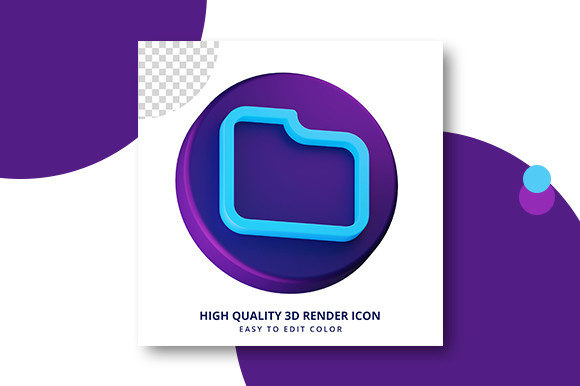
Folder Icon in 3d Rendering
In the fast-paced world of digital design, visual clarity is everything. When users navigate a website or interact with an application, they rely on intuitive cues to understand where their data lives and how to access it. This is where the Folder Icon in 3d Rendering becomes more than just a decorative element; it transforms into a powerful tool for user experience (UX) and interface (UI) design. By moving away from flat, two-dimensional graphics, designers can introduce depth, realism, and a tactile quality that draws the eye and enhances engagement.
Whether you are building a landing page, creating social media assets, or developing a complex web banner, incorporating 3D elements can elevate your project from standard to stunning. The ability to render folders with realistic lighting, shadows, and textures allows creators to communicate organization, storage, and security in a way that feels modern and premium. For beginners and seasoned professionals alike, understanding how to leverage these assets can significantly improve the aesthetic appeal and functionality of digital products.
Why 3D Icons Are Changing UI Design
The shift toward three-dimensional interfaces is not just a trend; it is a response to the human brain’s preference for spatial awareness. Flat design has its place, but it can sometimes feel sterile or overwhelming when used excessively. Introducing a 3D icon for Ui kits adds a layer of sophistication that helps distinguish important actions or categories. A folder icon rendered in 3D stands out because it mimics objects we interact with in the real world, making the digital environment feel more familiar and less abstract.
This approach supports better usability. Users can instantly recognize a folder as a container for files or projects. However, when that folder is presented with high-quality rendering, it suggests value and importance. It signals to the user that the content within is organized, protected, and ready to be accessed. For entrepreneurs and marketers, this subtle psychological cue can increase click-through rates and keep users engaged longer on a site or app.
Key Characteristics of High-Quality 3D Folder Assets
Not all 3D icons are created equal. To ensure your design remains professional and effective, it is crucial to select assets that possess specific qualities. A superior Folder Icon in 3d Rendering will feature:
- Realistic Lighting and Shadows: Proper shading creates depth, preventing the icon from looking like a floating object. Soft shadows ground the icon, making it feel like it belongs in the interface.
- Consistent Style: Whether you choose a glossy, metallic look or a matte, pastel finish, consistency across all UI elements is key. Mixing styles can confuse users and dilute brand identity.
- Scalability: High-resolution renders ensure that the icon looks crisp on both mobile screens and large desktop monitors without pixelation.
- Customizability: The best assets allow for easy editing. Being able to adjust the color scale is essential for matching your brand guidelines or adjusting for different themes, such as dark mode.
Practical Applications Across Digital Platforms
The versatility of a well-crafted 3D folder icon extends far beyond simple file management systems. Its utility spans various platforms and purposes, making it an invaluable asset for any creative workflow. Here is how different professionals can utilize this asset effectively.
Websites and Landing Pages
For web designers, the hero section of a landing page is prime real estate. Using a large, detailed 3D folder icon here can immediately convey the purpose of the service. If you offer cloud storage, document management, or educational resources, a prominent 3D folder serves as a clear visual metaphor. It invites users to explore further. Additionally, using these icons in navigation bars or sidebar menus can break up text-heavy layouts, providing visual relief and guiding the user’s eye to key sections.
Social Media and Marketing Campaigns
In the crowded space of social media, stopping the scroll is half the battle. A Folder Icon in 3d Rendering can be used creatively in marketing materials. Imagine a promotional post for a new e-book or a course. Instead of a flat image, use a 3D folder that appears to be opening, revealing glowing documents or charts inside. This dynamic visual grabs attention and suggests abundance and value. It works exceptionally well for advertising campaigns aimed at educators, bloggers, and small business owners who need to showcase digital products.
YouTube Channels and Video Content
Content creators can benefit greatly from 3D assets in their branding. Use the folder icon as part of your channel logo, video thumbnails, or end screens. When designing a thumbnail for a tutorial on "How to Organize Your Digital Files," a stylized 3D folder can make the image pop against YouTube’s white background. It adds a professional touch that distinguishes your content from lower-effort videos, helping to build trust with your audience.
Web Banners and Promotional Materials
For freelancers and agencies, web banners need to be concise yet impactful. A 3D folder can represent data security, backup solutions, or portfolio organization. Because these icons are often vector-based or high-res raster images, they can be resized without losing quality. This flexibility allows you to use the same asset in a small button on a webpage or a large billboard-style banner, maintaining brand consistency across all touchpoints.
Customization and Ease of Use
One of the most significant advantages of modern 3D UI assets is their adaptability. You do not need to be a 3D modeling expert to use them effectively. Most high-quality 3D icon for Ui kits come with editable properties. This means you can tweak the color palette to match your brand’s primary and secondary colors. If your website uses a blue and white theme, you can easily adjust the folder’s hue to complement the existing design scheme.
This ease of editing is particularly useful for A/B testing. Marketers can create two versions of a landing page—one with a neutral-colored folder and another with a vibrant, branded version—to see which drives more conversions. The ability to change the color scale quickly saves time and reduces the need for multiple designer requests. It empowers non-designers, such as project managers or content strategists, to make minor visual adjustments without breaking the design system.
Considerations Before Implementation
While 3D icons offer many benefits, there are practical considerations to keep in mind. Performance is a major factor. High-resolution 3D renders can be file-intensive. If you load too many heavy images on a landing page, it may slow down the site speed, which negatively impacts SEO and user experience. Always optimize your assets for the web by compressing images appropriately or using formats like WebP.
Furthermore, accessibility should never be overlooked. Ensure that your 3D icons have proper alt text descriptions. Screen readers cannot "see" the 3D effect, so descriptive text helps visually impaired users understand the function of the icon. For example, instead of just labeling it "folder," use alt text like "3D folder icon representing project files."
Finally, consider the context of your audience. If your target demographic consists of older adults or users on low-bandwidth connections, overly complex 3D effects might be distracting or difficult to load. In such cases, simpler, cleaner designs might be more appropriate. Always balance aesthetic appeal with functional usability.
Conclusion
Incorporating a Folder Icon in 3d Rendering into your design toolkit offers a strategic advantage in today’s competitive digital landscape. It bridges the gap between functionality and aesthetics, providing users with clear, engaging, and memorable visual cues. Whether you are designing a sleek landing page, creating eye-catching social media posts, or organizing a YouTube channel, these assets provide the polish needed to stand out. By choosing customizable, high-quality icons and applying them thoughtfully, you can enhance the overall user experience and drive better results for your projects.